 …
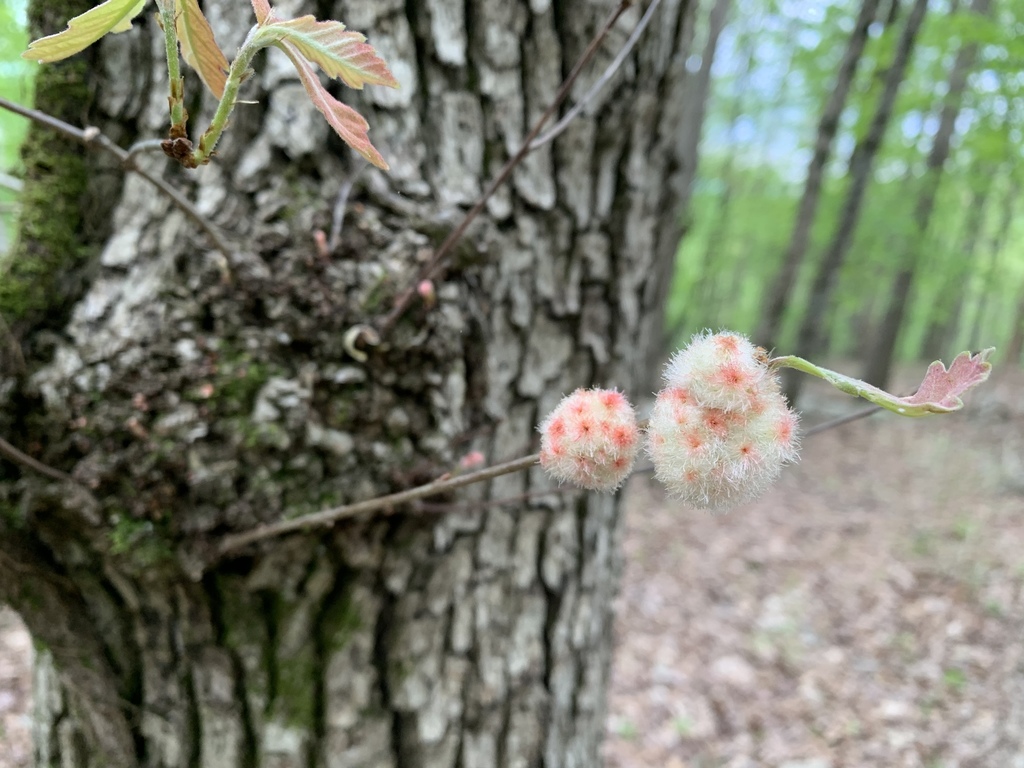
Wool Sower Gall Wasp
Callirhytis seminator
Insectstrong against fungi, fish
Common
Swarm
While active with another insect in play, each of its attacks also hits the opposing bench for 10, without knocking them out (20 with two others).
31

39
Wool Sower Gall Wasp
Callirhytis seminator
Insectstrong against fungi, fish
Common
While active with another insect in play, each of its attacks also hits the opposing bench for 10, without knocking them out (20 with two others).
Callirhytis seminator
Photo: © Neal Kelso (original photo) · CC BY 4.0 (licence text) · cropped
Strong against: it deals 20% more damage to them. Weak against: these types deal 20% more damage to it.
Callirhytis seminator, the wool sower, is a species of gall wasp in the family Cynipidae.
The adult wasps are about 1/8" in length and dark brown in color. The larvae are white and fat and have no legs. The wasps only lay eggs on white oak trees and only in the spring. They lay the egg in a gall, a round, white structure resembling a cotton ball. It starts out white and later changes color. The larvae develop inside the gall. If pulled open, the gall will appear to have seedlike structures inside it. These structures are actually hard plant material.
Gall wasps have a two-generation alternating cycle: One generation produces stem galls, and the wasps that emerge from that stem gall mature and lay their own eggs in leaf galls. The wasps that emerge from the leaf gall mature and produce stem galls. Scientists do not know what the alternate wool sower wasp gall looks like.
The wasps neither sting humans nor occur in such numbers as to damage the white oak trees.
Excerpt from the Wikipedia article Callirhytis seminator, by its authors, under the CC BY-SA 4.0 licence.
No global status on the IUCN Red List: that’s what makes this card Common.
Every Common card has 100 points, shared between HP, ATK and DEF:
How they’re shared out:

 DEF 39