 …
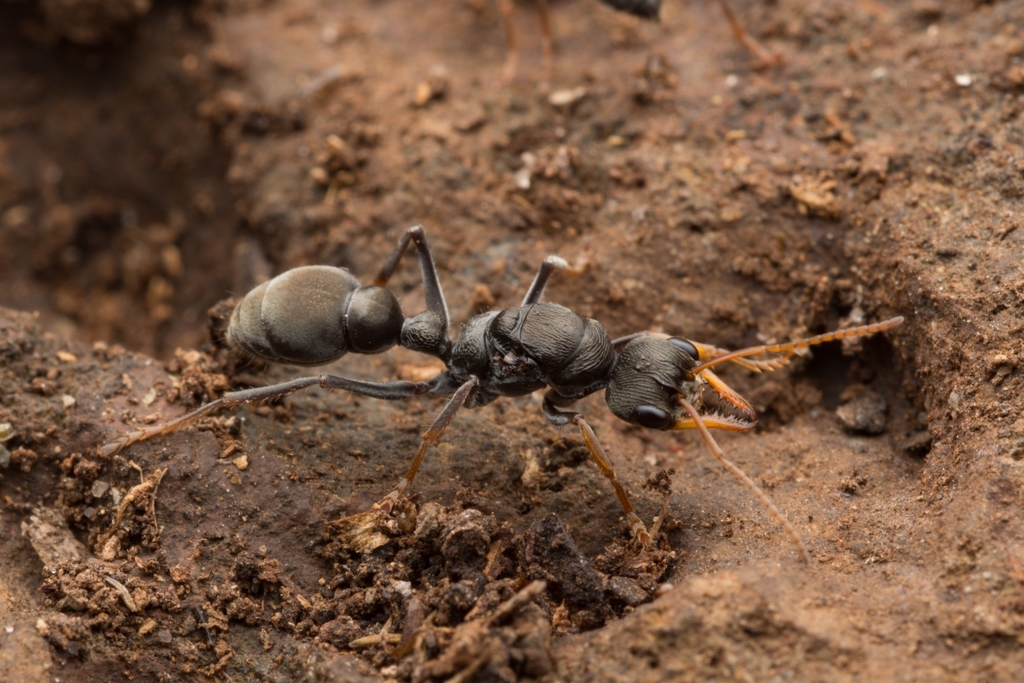
Jack Jumper Ant
Myrmecia pilosula
Insectstrong against fungi, fish
Common
Swarm
While active with another insect in play, each of its attacks also hits the opposing bench for 10, without knocking them out (20 with two others).
32

38
Jack Jumper Ant
Myrmecia pilosula
Insectstrong against fungi, fish
Common
While active with another insect in play, each of its attacks also hits the opposing bench for 10, without knocking them out (20 with two others).
Myrmecia pilosula
Photo: © Jonghyun Park (original photo) · CC BY 4.0 (licence text) · cropped
Strong against: it deals 20% more damage to them. Weak against: these types deal 20% more damage to it.
The jack jumper ant (Myrmecia pilosula), also known as the jack jumper, jumping jack, hopper ant, or jumper ant, is a species of venomous ant native to Australia. Most frequently found in Tasmania and southeast mainland Australia, it is a member of the genus Myrmecia, subfamily Myrmeciinae, and was formally described and named by British entomologist Frederick Smith in 1858. This species is known for its ability to jump long distances. These ants are large; workers and males are about the same size: 12 to 14 mm (0.47 to 0.55 in) for workers, and 11 to 12 mm (0.43 to 0.47 in) for males. The queen measures roughly 14 to 16 mm (0.55 to 0.63 in) long and is similar in appearance to workers, whereas males are identifiable by their perceptibly smaller mandibles.
Jack jumper ants are primarily active during the day and live in open habitats, nesting in bushland, woodlands, and dry open forests, surrounded by gravel and sandy soil, which can be found in rural areas and are less common in urban areas. They prey on small insects and use their barbless stingers to kill other insects by injecting venom. Other ants and predatory invertebrates prey on the jack jumper ant. The average worker has a life expectancy of over one year. Workers are gamergates, allowing them to reproduce with drones, whether or not a queen is present in the colony. The ant is a part of the Myrmecia pilosula species complex; this ant and other members of the complex are known to have a single pair of chromosomes.
Abridged excerpt from the Wikipedia article Jack jumper ant, by its authors, under the CC BY-SA 4.0 licence.
No global status on the IUCN Red List: that’s what makes this card Common.
Every Common card has 100 points, shared between HP, ATK and DEF:
How they’re shared out:

 DEF 38