 …
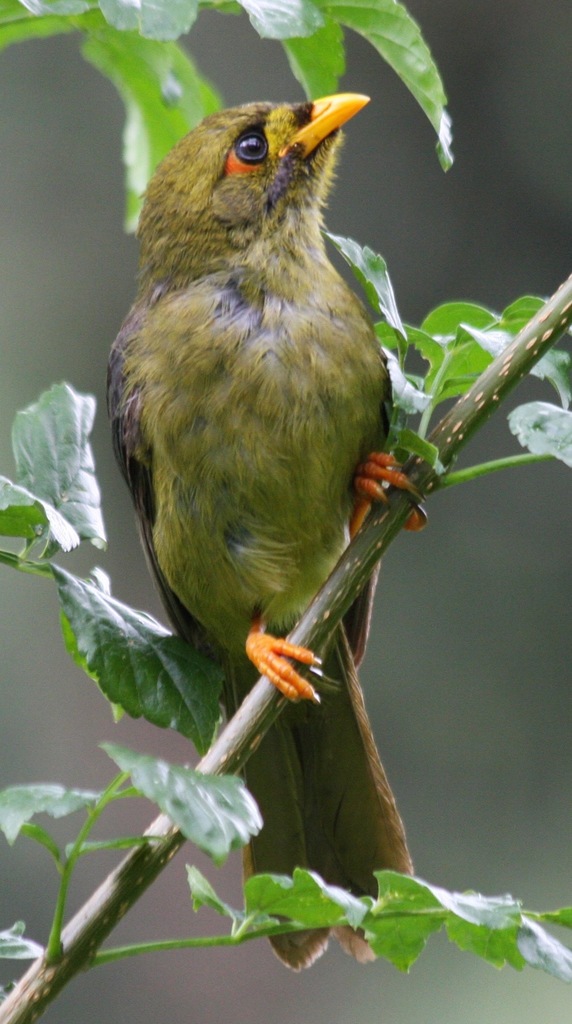
Bell Miner
Manorina melanophrys
Birdstrong against fish, reptiles
Common
Swoop
While active with another bird in play, it hits 6 harder on its first attack after entering play (12 with two others).
31

39
Bell Miner
Manorina melanophrys
Birdstrong against fish, reptiles
Common
While active with another bird in play, it hits 6 harder on its first attack after entering play (12 with two others).
Manorina melanophrys
Photo: © AllisonDRoberts (original photo) · CC BY-SA 4.0 (licence text) · cropped
Strong against: it deals 20% more damage to them. Weak against: these types deal 20% more damage to it.
The bell miner or bellbird (Manorina melanophrys) is a colonial honeyeater, endemic to southeastern Australia. The common name refers to their bell-like call. "Miner" is an old alternative spelling of "myna", and is shared with other members of the genus Manorina. The birds feed almost exclusively on the dome-like coverings, referred to as lerps, of certain psyllid bugs.
Bell miners live in large, complex, social groups. Within each group, there are subgroups consisting of several breeding pairs, but also including a number of birds that are not currently breeding. The nonbreeders help in providing food for the young in all the nests within the subgroup, even though they are not necessarily closely related to them. The birds defend their colony area communally and aggressively, excluding most other passerine species. They do this in order to protect their territory from other insect-eating birds that would eat the bell lerps on which they feed. Whenever the local forests die back, due to increased lerp psyllid infestations, bell miners undergo a population boom.
The heritage listed mountain village of Bellbrook was named after the distinctive sound of local bellbirds in 1882.
Excerpt from the Wikipedia article Bell miner, by its authors, under the CC BY-SA 4.0 licence.
Least Concern on the IUCN Red List: that’s what makes this card Common.
Every Common card has 100 points, shared between HP, ATK and DEF:
How they’re shared out:

 DEF 39