
Evergreen Bagworm Moth
Thyridopteryx ephemeraeformis
Insectstrong against fungi, fish
Common
While active with another insect in play, each of its attacks also hits the opposing bench for 10, without knocking them out (20 with two others).

Evergreen Bagworm Moth
Thyridopteryx ephemeraeformis
Insectstrong against fungi, fish
Common
While active with another insect in play, each of its attacks also hits the opposing bench for 10, without knocking them out (20 with two others).
Thyridopteryx ephemeraeformis
Photo: © Bill Keim (original photo) · CC BY 4.0 (licence text) · cropped
Strong against: it deals 20% more damage to them. Weak against: these types deal 20% more damage to it.
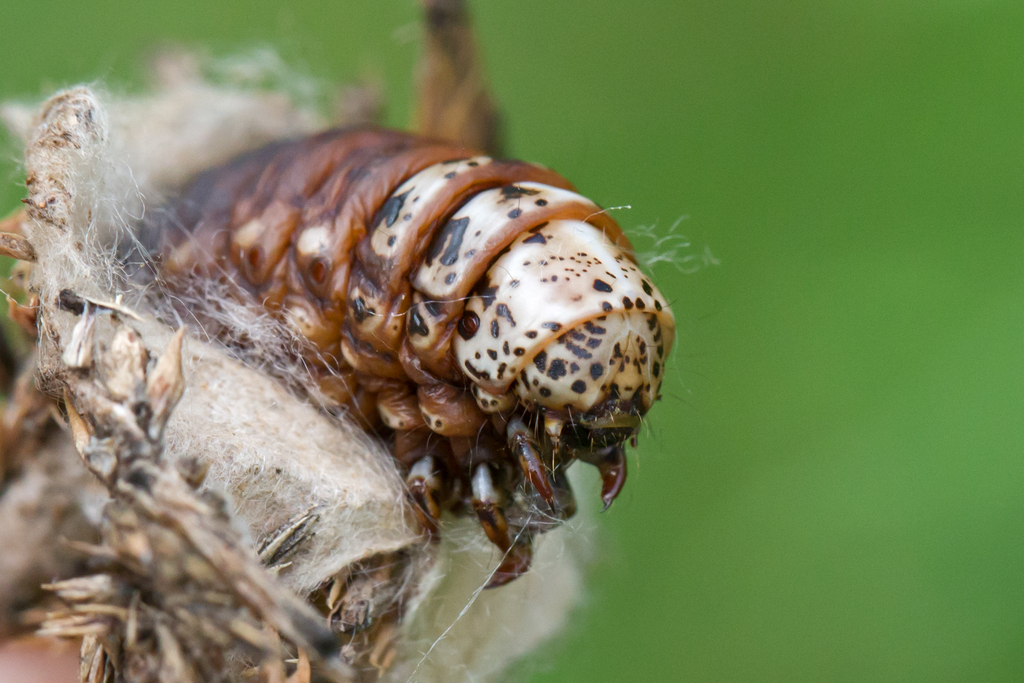
The evergreen bagworm (Thyridopteryx ephemeraeformis), commonly known as bagworm,
eastern bagworm, common bagworm, common basket worm, or North American bagworm, is a moth that spins its cocoon in its larval life, decorating it with bits of plant material from the trees on which it feeds.
The evergreen bagworm's case grows to over 6 cm, tapered and open on both ends. Newborn larvae are blackish and turn brown to tan as they grow, mottled with black. The heads and thorax develop a yellow tint as they grow to a total length of 24 to 32 mm. Adult males resemble bees, having a 25 mm wingspan with transparent wings (thuris window + pterux wing) and black furry bodies. Adult females are maggot-like with yellowish-white soft bodies 19 to 23 mm long and small tufts of hair near the end of the abdomen. The cream-colored eggs are 0.75 mm in diameter.
The evergreen bagworm thrives in the eastern United States as far west as Nebraska, north into New England, and bordering the Gulf of Mexico south throughout Texas. It has been found in other countries, such as South Africa, Croatia, and in the north-east of Iran. Large populations in forested areas are rare. With scarce predators in urban areas, evergreen bagworms often thrive in urban habitats. When disturbed, the larva retracts its head into its case and closes the front opening. Mature larvae may remain in the host tree or drag their case nearby before attaching themselves for the pupa stage.
Abridged excerpt from the Wikipedia article Evergreen bagworm, by its authors, under the CC BY-SA 4.0 licence.
No global status on the IUCN Red List: that’s what makes this card Common.
Every Common card has 100 points, shared between HP, ATK and DEF:
How they’re shared out:

