 …
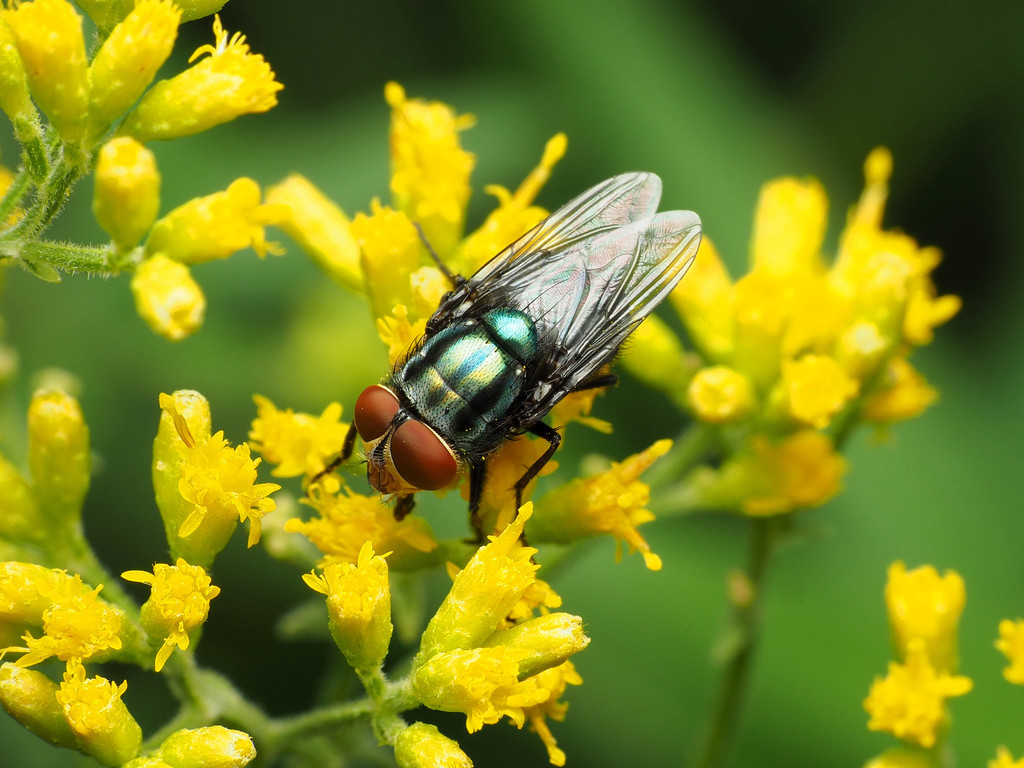
Secondary Screwworm Fly
Cochliomyia macellaria
Insectstrong against fungi, fish
Common
Swarm
While active with another insect in play, each of its attacks also hits the opposing bench for 10, without knocking them out (20 with two others).
40

38
Secondary Screwworm Fly
Cochliomyia macellaria
Insectstrong against fungi, fish
Common
While active with another insect in play, each of its attacks also hits the opposing bench for 10, without knocking them out (20 with two others).
Cochliomyia macellaria
Photo: © Katja Schulz (original photo) · CC BY 4.0 (licence text) · cropped
Strong against: it deals 20% more damage to them. Weak against: these types deal 20% more damage to it.
Cochliomyia macellaria, also known as the secondary screwworm, is a species of blow fly in the family Calliphoridae. These screwworms are referred to as "secondary" because they typically infest wounds after invasion by primary myiasis-causing flies. While blow flies may be found in every terrestrial habitat, C. macellaria is primarily found in the United States, American tropics, and sometimes southern Canada. They are most common in the southeastern United States in states like Florida. C. macellaria have a metallic greenish-blue thorax and a red-orange head and eyes. These adult blowflies range from 5–8 mm in size.
Since the fly larvae infect the wounds and dead tissue of animals, these flies pose a grave medical and economic risk to humans and livestock. C. macellaria are attracted to carrion and garbage and are often found in slaughterhouses and outdoor markets in the tropics. While these flies carry many various types of Salmonella and viruses like the swine influenza, C. macellaria can also serve as important decomposers in our ecosystem.
Excerpt from the Wikipedia article Cochliomyia macellaria, by its authors, under the CC BY-SA 4.0 licence.
No global status on the IUCN Red List: that’s what makes this card Common.
Every Common card has 100 points, shared between HP, ATK and DEF:
How they’re shared out:

 DEF 38