 …
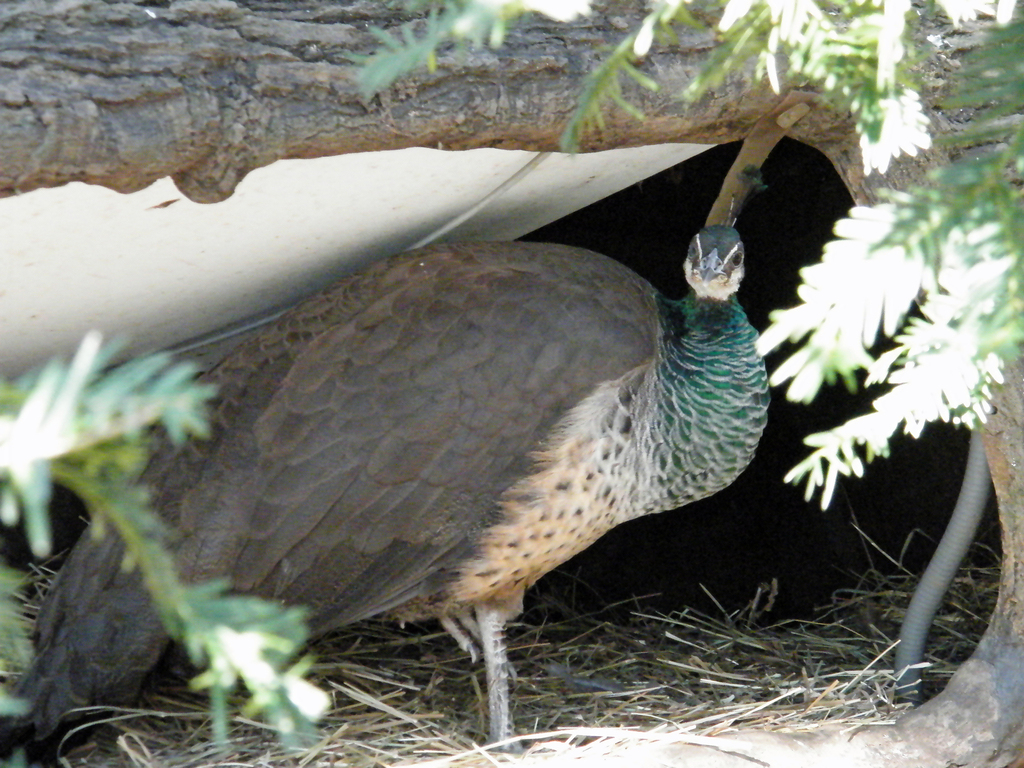
Indian Peafowl
Pavo cristatus
Birdstrong against fish, reptiles
Common
Swoop
While active with another bird in play, it hits 6 harder on its first attack after entering play (12 with two others).
33

32
Indian Peafowl
Pavo cristatus
Birdstrong against fish, reptiles
Common
While active with another bird in play, it hits 6 harder on its first attack after entering play (12 with two others).
Pavo cristatus
Photo: © Sarah Stierch (original photo) · CC BY 4.0 (licence text) · cropped
Strong against: it deals 20% more damage to them. Weak against: these types deal 20% more damage to it.
The Indian peafowl (Pavo cristatus), also known as the common peafowl, or blue peafowl, is a species of peafowl native to the Indian subcontinent. While it originated in the Indian subcontinent, it has since been introduced to many other parts of the world. Male peafowl are referred to as peacocks, and female peafowl are referred to as peahens, although both sexes are often referred to colloquially as a "peacock".
The Indian peafowl displays a marked form of sexual dimorphism. The brightly coloured male has a blue coloured head with a fan-shaped crest and is best known for his long train. The train is made up of elongated upper-tail covert feathers with colourful eyespots. These stiff feathers are raised into a fan and quivered in a display during courtship. The peahen is predominantly brown in colour, with a white face and iridescent green lower neck, and lacks the elaborate train. There are several colour mutations of the Indian peafowl including the leucistic white peafowl.
Abridged excerpt from the Wikipedia article Indian peafowl, by its authors, under the CC BY-SA 4.0 licence.
Least Concern on the IUCN Red List: that’s what makes this card Common.
Every Common card has 100 points, shared between HP, ATK and DEF:
How they’re shared out:

 DEF 32