 …
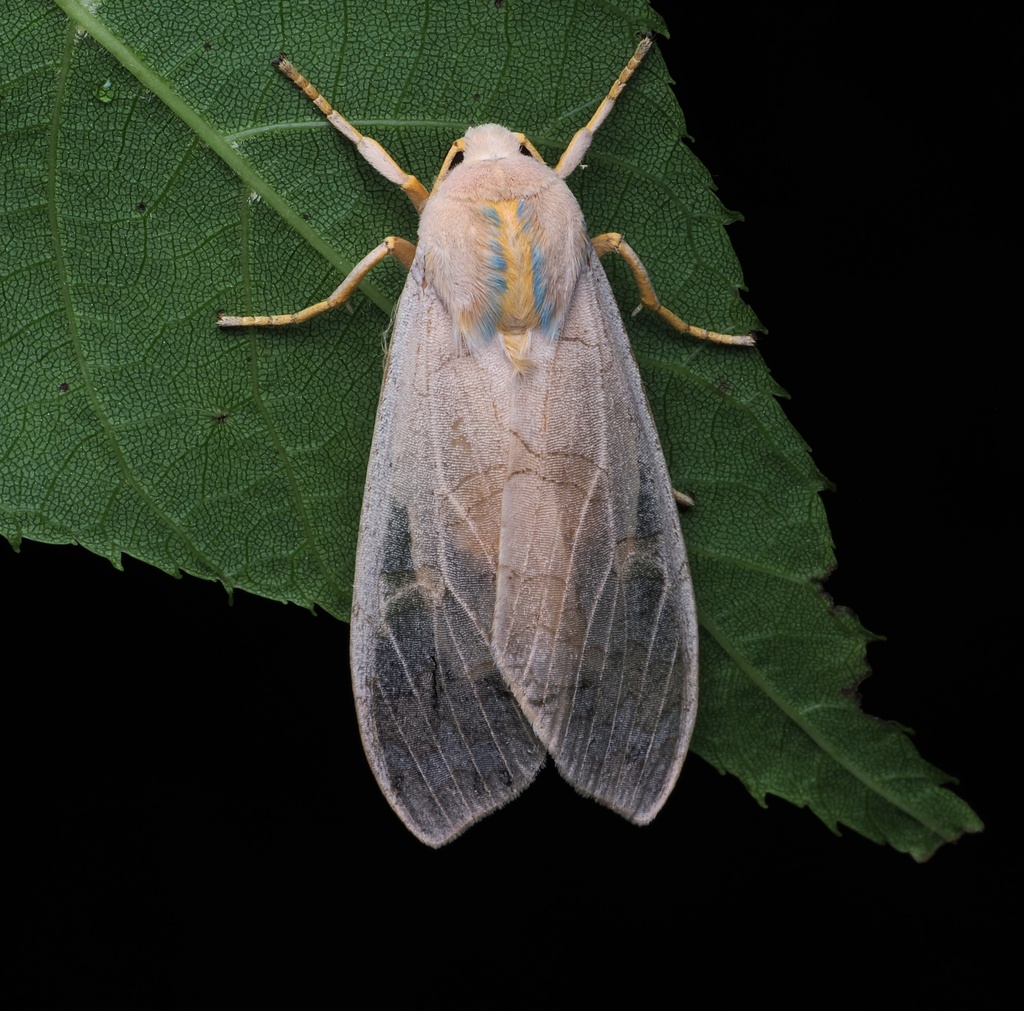
Banded Tussock Moth
Halysidota tessellaris
Insectstrong against fungi, fish
Common
Swarm
While active with another insect in play, each of its attacks also hits the opposing bench for 10, without knocking them out (20 with two others).
42

36
Banded Tussock Moth
Halysidota tessellaris
Insectstrong against fungi, fish
Common
While active with another insect in play, each of its attacks also hits the opposing bench for 10, without knocking them out (20 with two others).
Halysidota tessellaris
Photo: © Alan Rockefeller (original photo) · CC BY 4.0 (licence text) · cropped
Strong against: it deals 20% more damage to them. Weak against: these types deal 20% more damage to it.
Halysidota tessellaris, also called the pale tiger moth, banded tussock moth, and tessellated halisidota, is in the family Erebidae and the tribe Arctiini, the tiger moths. The species was first described by James Edward Smith in 1797. Like many related species, adult moths have chemical defenses acquired from its host plants, in this case, alkaloids. Larval behaviors suggest that they are chemically protected; they have not been analyzed for alkaloid content.
Excerpt from the Wikipedia article Halysidota tessellaris, by its authors, under the CC BY-SA 4.0 licence.
No global status on the IUCN Red List: that’s what makes this card Common.
Every Common card has 100 points, shared between HP, ATK and DEF:
How they’re shared out:

 DEF 36