 …
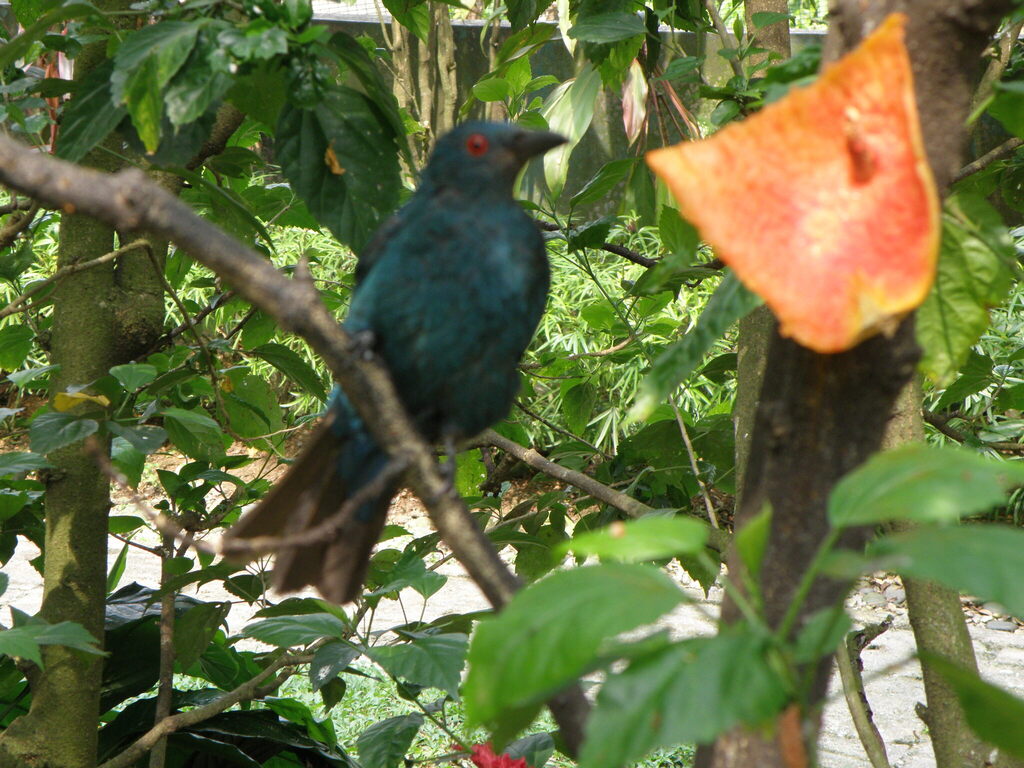
Asian Fairy-bluebird
Irena puella
Birdstrong against fish, reptiles
Common
Swoop
While active with another bird in play, it hits 6 harder on its first attack after entering play (12 with two others).
41

38
Asian Fairy-bluebird
Irena puella
Birdstrong against fish, reptiles
Common
While active with another bird in play, it hits 6 harder on its first attack after entering play (12 with two others).
Irena puella
Photo: © Jean Jacques Godon (original photo) · CC BY 4.0 (licence text) · cropped
Strong against: it deals 20% more damage to them. Weak against: these types deal 20% more damage to it.
The Asian fairy-bluebird (Irena puella) is a medium-sized, arboreal passerine bird. This fairy-bluebird is found in forests across tropical southern Asia, Indochina and the Greater Sundas. Two or three eggs are laid in a small cup nest in a tree. It was described by British ornithologist John Latham in 1790. The only other member of the genus and family is the Philippine fairy-bluebird, I. cyanogastra, which replaces the Asian fairy-bluebird in most of the Philippines. Both species are considered as sacred to the Tagalog people as they are perceived as tigmamanukan omens.
The adult Asian fairy bluebird is about 24 to 27 centimetres (9.4 to 10.6 in). The male has glossy, iridescent blue upperparts, and black underparts and flight feathers. The female and first year male are entirely dull blue-green.
The Asian fairy bluebird eats fruits, nectar and some insects. Its call is a liquid two note glue-it.
Excerpt from the Wikipedia article Asian fairy-bluebird, by its authors, under the CC BY-SA 4.0 licence.
Least Concern on the IUCN Red List: that’s what makes this card Common.
Every Common card has 100 points, shared between HP, ATK and DEF:
How they’re shared out:

 DEF 38