 …
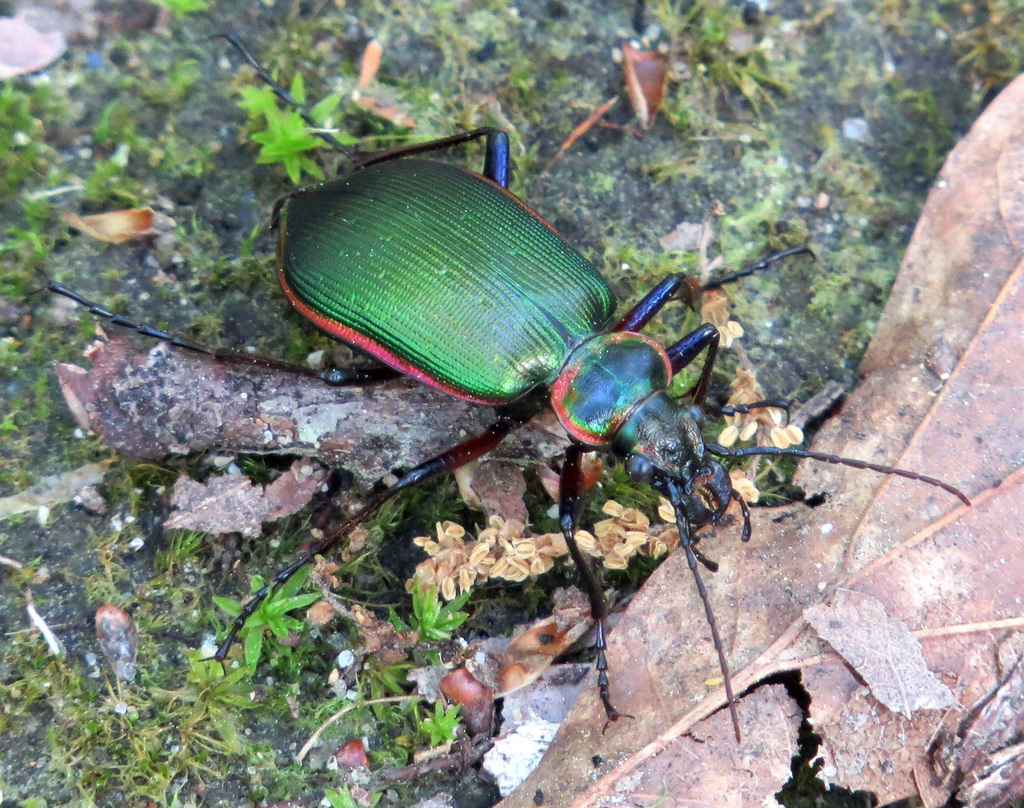
Fiery Searcher
Calosoma scrutator
Insectstrong against fungi, fish
Common
Swarm
While active with another insect in play, each of its attacks also hits the opposing bench for 10, without knocking them out (20 with two others).
31

39
Fiery Searcher
Calosoma scrutator
Insectstrong against fungi, fish
Common
While active with another insect in play, each of its attacks also hits the opposing bench for 10, without knocking them out (20 with two others).
Calosoma scrutator
Photo: © David Hill (original photo) · CC BY 4.0 (licence text) · cropped
Strong against: it deals 20% more damage to them. Weak against: these types deal 20% more damage to it.
Calosoma scrutator, commonly known as the fiery searcher and caterpillar hunter, is a species of ground beetle belonging to the genus Calosoma. This beetle can be as large as 35 millimetres (1.4 in) long, and is hence among the largest of the ground beetles found in North America. The distribution of this species is relatively widespread, and is common in North America. The adult beetle is known to excrete a foul-smelling oil when it is handled. The oil has been described as smelling similar to rotten milk or rancid olive oil.
It was originally described in Virginia by Johan Christian Fabricius in 1775. It is a predatory beetle and also happens to be predatorial in its larval stage as well. Their varying colors and metallic shine make them very intriguing to those who spend time collecting different types of bugs. They are found mostly in North America along the east coast but have been found in Mexico, Venezuela, and Guatemala. Adults eat caterpillars and other worms, but most notably the forest tent caterpillar (Mala-cosoma disstria) and cankerworms. This fact gives Calosoma scrutator the nickname of "Caterpillar Hunter". These beetles are very good predators of agricultural pests such as spongy moth larvae. Predators that like to snack on the fiery searcher beetle include skunks, birds, raccoons, foxes, and toads.
Excerpt from the Wikipedia article Calosoma scrutator, by its authors, under the CC BY-SA 4.0 licence.
No global status on the IUCN Red List: that’s what makes this card Common.
Every Common card has 100 points, shared between HP, ATK and DEF:
How they’re shared out:

 DEF 39