 …
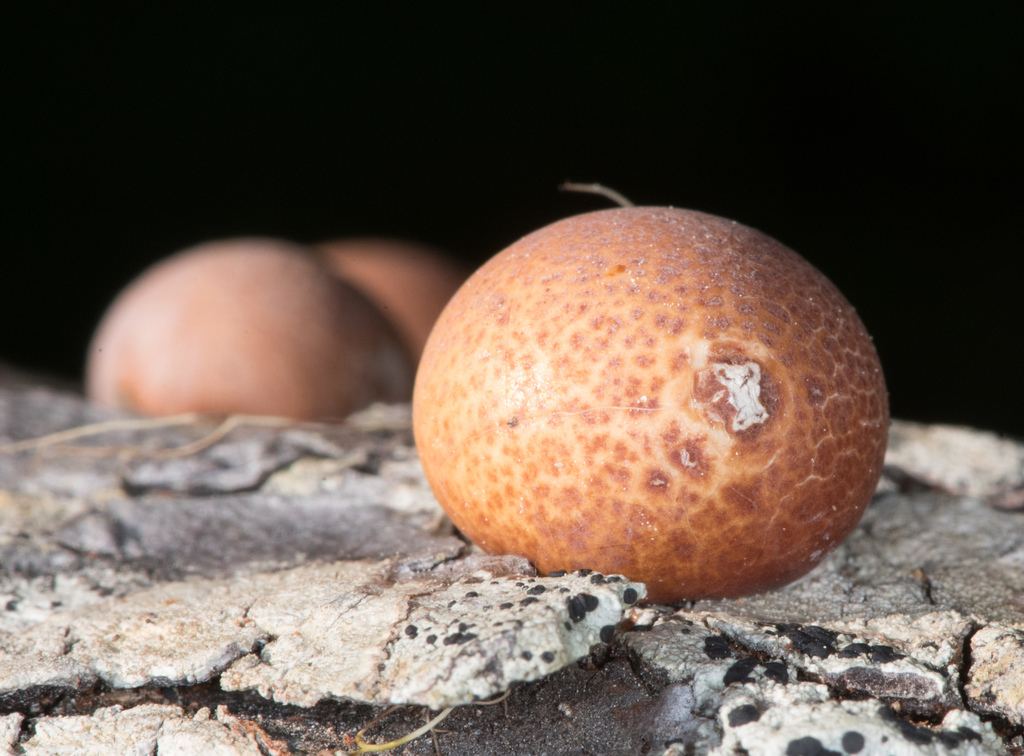
Veiled Polypore
Cryptoporus volvatus
Fungusstrong against amphibians, reptiles
Common
Mycelium
While active with another fungus in play, it regains 5 HP at the start of your turn (8 with two others).
40

28
Veiled Polypore
Cryptoporus volvatus
Fungusstrong against amphibians, reptiles
Common
While active with another fungus in play, it regains 5 HP at the start of your turn (8 with two others).
Cryptoporus volvatus
Photo: © Don Loarie (original photo) · CC BY 4.0 (licence text) · cropped
Strong against: it deals 20% more damage to them. Weak against: these types deal 20% more damage to it.
Cryptoporus volvatus, commonly known as the veiled polypore or cryptic globe fungus, is a polypore fungus that decomposes the rotting sapwood of conifers. It is an after effect of attack by the pine bark beetle.
The fungus was originally described by American mycologist Charles Horton Peck in 1875 as Polyporus volvatus. Cornelius Lott Shear transferred it to the genus Cryptoporus in 1902.
The fruiting body is 1.5–8.5 centimetres (1⁄2–3+1⁄4 in) across and cream or tan in color. It is hollow inside and a hole is either torn by insects or a tear appears on the underside. There are 3–4 whitish pores per millimetre, hidden by the veil-like margin. The spores are pinkish.
Some insects lay their larvae inside the fruiting body. Due to its toughness, it is inedible.
Excerpt from the Wikipedia article Cryptoporus volvatus, by its authors, under the CC BY-SA 4.0 licence.
No global status on the IUCN Red List: that’s what makes this card Common.
Every Common card has 100 points, shared between HP, ATK and DEF:
How they’re shared out:

 DEF 28