 …
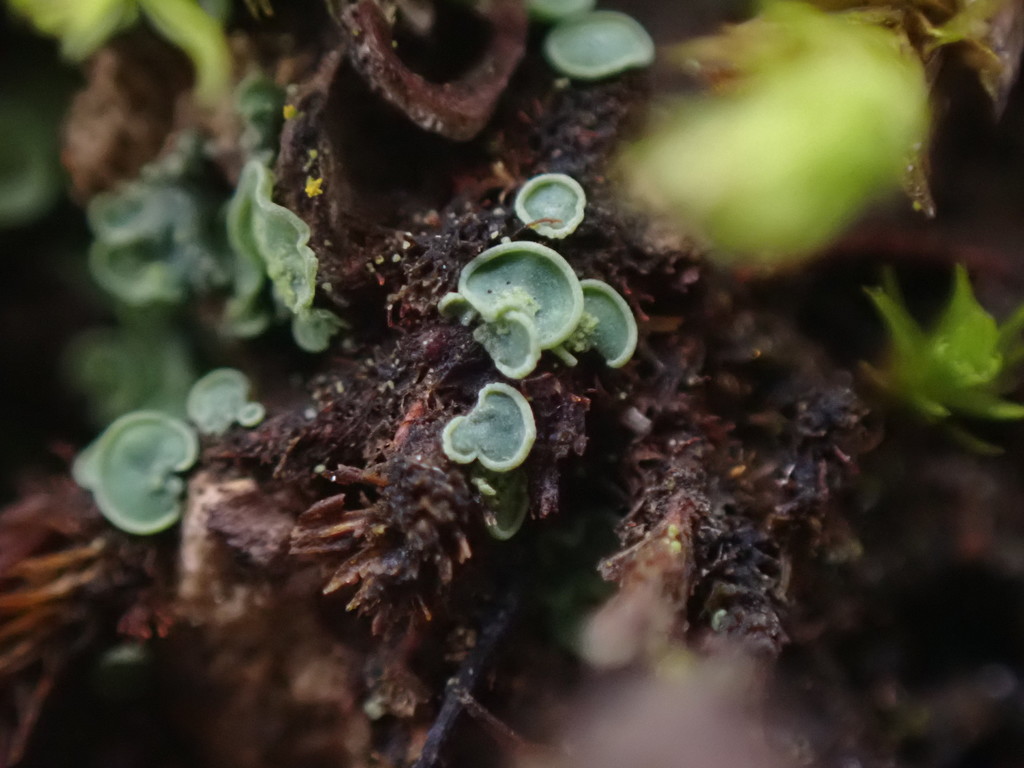
Elf Ears lichen
Normandina pulchella
Fungusstrong against amphibians, reptiles
Common
Mycelium
While active with another fungus in play, it regains 5 HP at the start of your turn (8 with two others).
39

29
Elf Ears lichen
Normandina pulchella
Fungusstrong against amphibians, reptiles
Common
While active with another fungus in play, it regains 5 HP at the start of your turn (8 with two others).
Normandina pulchella
Photo: Randal (original photo) · CC0 (licence text) · cropped
Strong against: it deals 20% more damage to them. Weak against: these types deal 20% more damage to it.
Normandina pulchella, commonly known as the elf-ear lichen or blue heart, is a species of squamulose lichen in the family Verrucariaceae. This cosmopolitan species is widely distributed across both hemispheres, where it thrives in moist microhabitats. It favours moss-covered deciduous trees and rocks, often colonising over mosses and bryophytes. It occasionally grows on bare bark and on other lichens. Distinctive features of N. pulchella include its bluish-green squamules (scales) with sharply raised margins, non-reactivity to standard chemical spot tests, and growth in humid habitats. Initially, Nannochloris normandinae, a green alga, was thought to be its photobiont. More recent studies, however, have revised this understanding, with Diplosphaera chodatii now recognised as the algal partner.
First named and scientifically described by the English botanist William Borrer in 1831, the clarification of Normandina pulchella's place within the Verrucariaceae, facilitated by molecular phylogenetics analysis in 2010, resolved long-standing taxonomic uncertainties. Prior classifications had varied widely, placing N. pulchella within groups such as the Basidiomycota (i.e., as a basidiolichen) and Fungi incertae sedis, largely due to differing interpretations of the perithecia (fruiting bodies) found within the lichen. These discrepancies stemmed from confusion over whether the perithecia belonged to the lichen itself or were instead associated with a parasitic lichenicolous fungus.
Excerpt from the Wikipedia article Normandina pulchella, by its authors, under the CC BY-SA 4.0 licence.
No global status on the IUCN Red List: that’s what makes this card Common.
Every Common card has 100 points, shared between HP, ATK and DEF:
How they’re shared out:

 DEF 29