 …
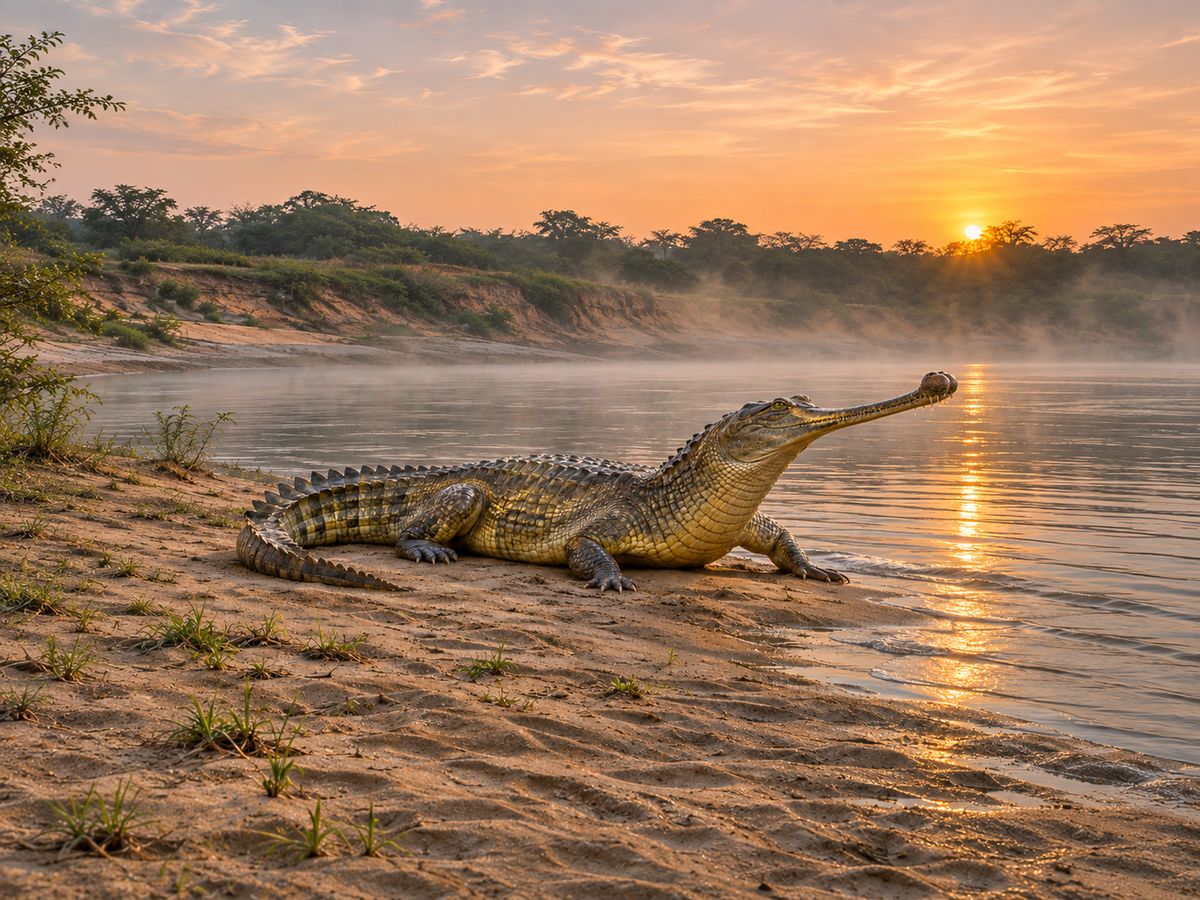
Gharial
Gavialis gangeticus
Reptilestrong against amphibians, mammals
Legendary
Slender jaws
While active, it hits 20 harder.
56
48
Gharial
Gavialis gangeticus
Reptilestrong against amphibians, mammals
Legendary
While active, it hits 20 harder.
Gavialis gangeticus
Reconstruction: © Wikapi (original image) · original illustration · cropped
Strong against: it deals 20% more damage to them. Weak against: these types deal 20% more damage to it.
The gharial (Gavialis gangeticus), also known as gavial or fish-eating crocodile, is a crocodilian in the family Gavialidae and among the longest of all living crocodilians. Mature females are 2.6–4.5 m (8.5–14.8 ft) long, and males 3–6 m (9.8–19.7 ft). Adult males have a distinct boss at the end of the snout, which resembles an earthenware pot known as a ghara, hence the name "gharial". The gharial is well adapted to catching fish because of its long, narrow snout and 110 sharp, interlocking teeth.
The gharial probably evolved in the northern Indian subcontinent. Fossil gharial remains were excavated in Pliocene deposits in the Sivalik Hills and the Narmada River valley. It currently inhabits rivers in the plains of the northern part of the Indian subcontinent. It is the most thoroughly aquatic crocodilian, and leaves the water only for basking and building nests on moist sandbanks. Adults mate at the end of the cold season. Females congregate in spring to dig nests, in which they lay 20–95 eggs. They guard the nests and the young, which hatch before the onset of the monsoon. The hatchlings stay and forage in shallow water during their first year, but move to sites with deeper water as they grow.
Abridged excerpt from the Wikipedia article Gharial, by its authors, under the CC BY-SA 4.0 licence.
Critically Endangered on the IUCN Red List. One of the 10 Legendary reptiles: that’s what makes this card Legendary.
Every Legendary card has 175 points, shared between HP, ATK and DEF:
How they’re shared out:

 DEF 48