 …
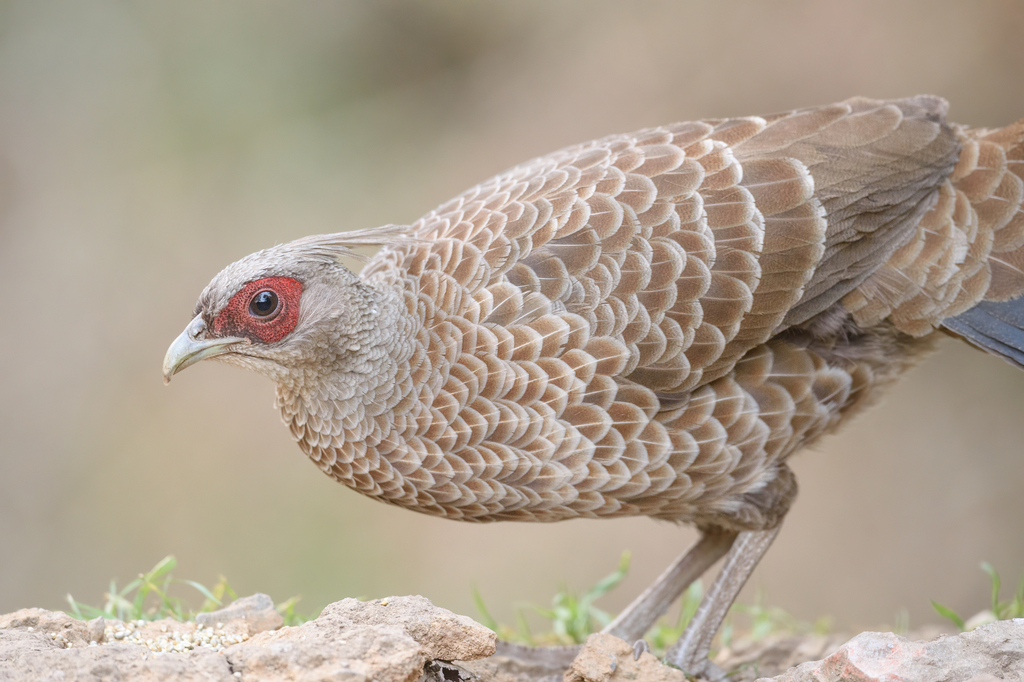
Kalij Pheasant
Lophura leucomelanos
Birdstrong against fish, reptiles
Common
Swoop
While active with another bird in play, it hits 6 harder on its first attack after entering play (12 with two others).
30

35
Kalij Pheasant
Lophura leucomelanos
Birdstrong against fish, reptiles
Common
While active with another bird in play, it hits 6 harder on its first attack after entering play (12 with two others).
Lophura leucomelanos
Photo: © Morten Ross (original photo) · CC BY 4.0 (licence text) · cropped
Strong against: it deals 20% more damage to them. Weak against: these types deal 20% more damage to it.
The kalij pheasant (Lophura leucomelanos), or simply kalij, is a pheasant found in forests and thickets, especially in the Himalayan foothills, from India, Nepal, Pakistan to western Thailand. Males are rather variable depending on the subspecies involved, but all have at least partially glossy bluish-black plumage, while females are overall brownish. Both sexes have a bare red face and greyish legs (the latter separating it from the red-legged silver pheasant). It is generally widespread, though three of its eastern subspecies (L. l. oatesi, L. l. lineata, and L. l. crawfurdi) are considered threatened and L. l. moffitti is virtually unknown in the wild.
The name is also spelled kaleege in old texts, such as Game Birds of India and Asia by Frank Finn, though no longer in his Indian Sporting Birds. The species was introduced to Hawaii in 1962 as a gamebird. On 21 October 2021, the Government of Jammu and Kashmir declared the kalij pheasant as bird of the Union Territory of Jammu and Kashmir.
Excerpt from the Wikipedia article Kalij pheasant, by its authors, under the CC BY-SA 4.0 licence.
Least Concern on the IUCN Red List: that’s what makes this card Common.
Every Common card has 100 points, shared between HP, ATK and DEF:
How they’re shared out:

 DEF 35