 …
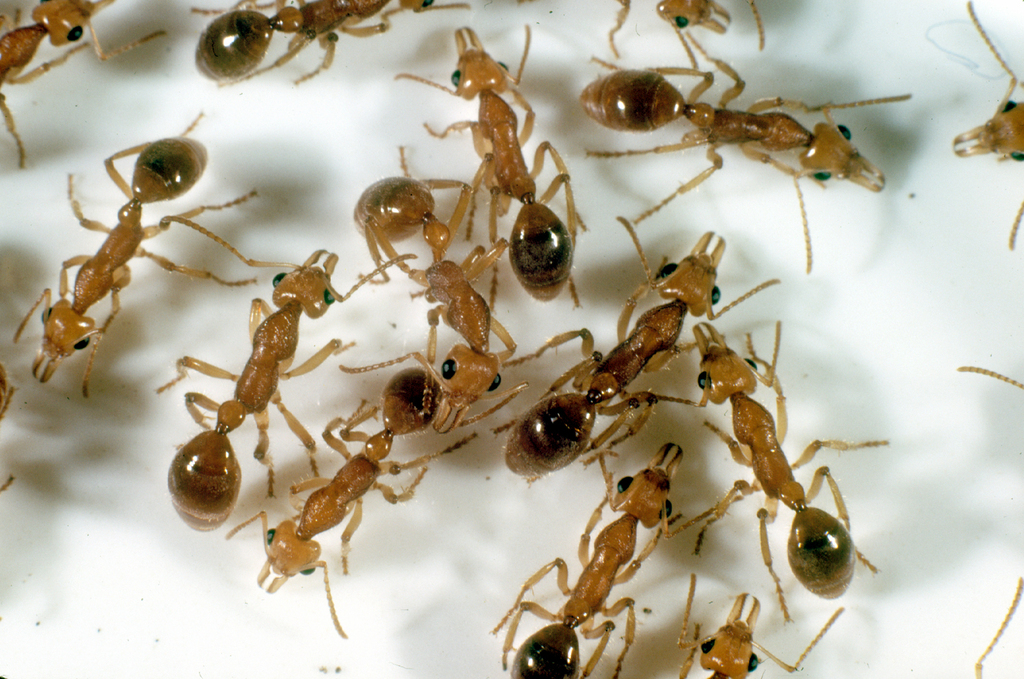
Dinosaur Ant
Nothomyrmecia macrops
Insectstrong against fungi, fish
Mythic
Leader · Swarm
Counts as two insects: while active, each of its attacks also hits the opposing bench for 10, without knocking them out (20 with another insect in play).
45

64
Dinosaur Ant
Nothomyrmecia macrops
Insectstrong against fungi, fish
Mythic
Counts as two insects: while active, each of its attacks also hits the opposing bench for 10, without knocking them out (20 with another insect in play).
Nothomyrmecia macrops
Photo: © CSIRO (original photo) · CC BY 4.0 (licence text) · cropped
Strong against: it deals 20% more damage to them. Weak against: these types deal 20% more damage to it.
Nothomyrmecia, also known as the dinosaur ant or dawn ant, is an extremely rare genus of ants consisting of a single species, Nothomyrmecia macrops. These ants live in South Australia, nesting in old-growth mallee woodland and Eucalyptus woodland. The full distribution of Nothomyrmecia has never been assessed, and it is unknown how widespread the species truly is; its potential range may be wider if it does favour old-growth mallee woodland. Possible threats to its survival include habitat destruction and climate change. Nothomyrmecia is most active when it is cold because workers encounter fewer competitors and predators such as Camponotus and Iridomyrmex, and it also increases hunting success. Thus, the increase of temperature may prevent them from foraging and very few areas would be suitable for the ant to live in. As a result, the IUCN lists the ant as Critically Endangered.
Abridged excerpt from the Wikipedia article Nothomyrmecia, by its authors, under the CC BY-SA 4.0 licence.
Critically Endangered on the IUCN Red List: that’s what makes this card Mythic.
Every Mythic card has 160 points, shared between HP, ATK and DEF:
How they’re shared out:

 DEF 64