 …
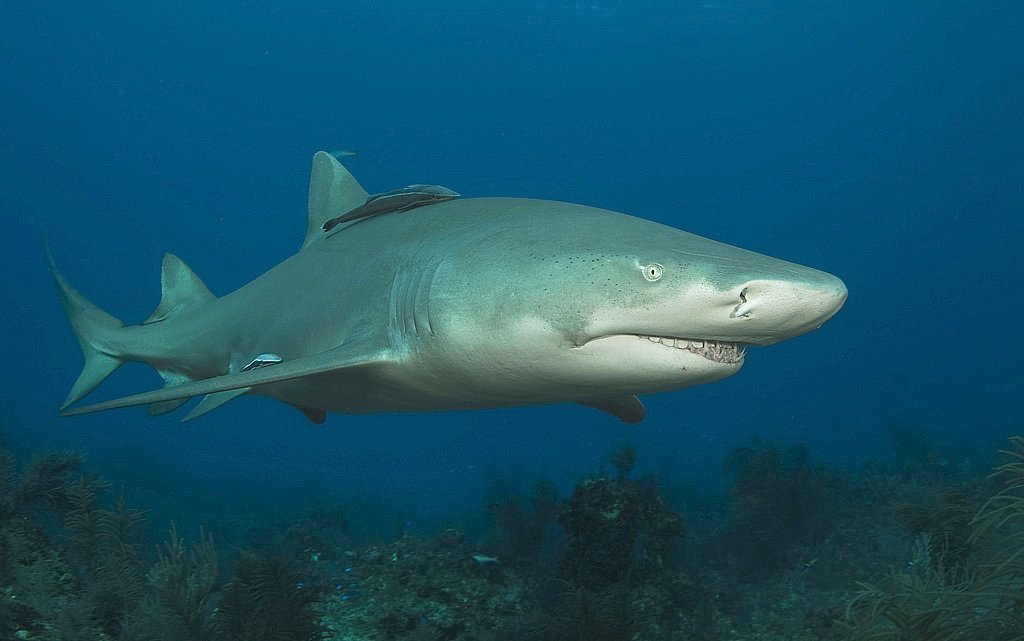
Lemon Shark
Negaprion brevirostris
Fishstrong against mammals, arachnids
Rare
School
While active with another fish in play, a fish on your bench absorbs up to 9 of the damage this card takes, without being knocked out (18 with two others).
33

37
Lemon Shark
Negaprion brevirostris
Fishstrong against mammals, arachnids
Rare
While active with another fish in play, a fish on your bench absorbs up to 9 of the damage this card takes, without being knocked out (18 with two others).
Negaprion brevirostris
Photo: © Albert kok (original photo) · CC BY-SA 4.0 (licence text) · cropped
Strong against: it deals 20% more damage to them. Weak against: these types deal 20% more damage to it.
The lemon shark (Negaprion brevirostris) is a species of requiem shark from the family Carcharhinidae, known for its yellowish skin, which inspires its common name.
The lemon shark is classified as a "vulnerable" species by the International Union for the Conservation of Nature.
Lemon sharks can grow to 3.4 m (11 ft) in length. They are often found in shallow subtropical waters and are known to inhabit and return to specific nursery sites for breeding. Often feeding at night, these sharks use electroreceptors to find their main source of prey, fish. Lemon sharks enjoy the many benefits of group living, such as enhanced communication, courtship, predatory behavior, and protection. This species gives birth to live young, and the females are polyandrous and have a biennial reproductive cycle. Lemon sharks are not thought to be a large threat to humans; only 10 bites have been recorded, none of which were life-threatening. The lemon shark's lifespan is unknown, but the typical shark is 25 to 30 years old.
In 2023, the oldest recorded lemon shark in captivity died at the age of 40 years.
Excerpt from the Wikipedia article Lemon shark, by its authors, under the CC BY-SA 4.0 licence.
Vulnerable on the IUCN Red List: that’s what makes this card Rare.
Every Rare card has 130 points, shared between HP, ATK and DEF:
How they’re shared out:

 DEF 37