 …
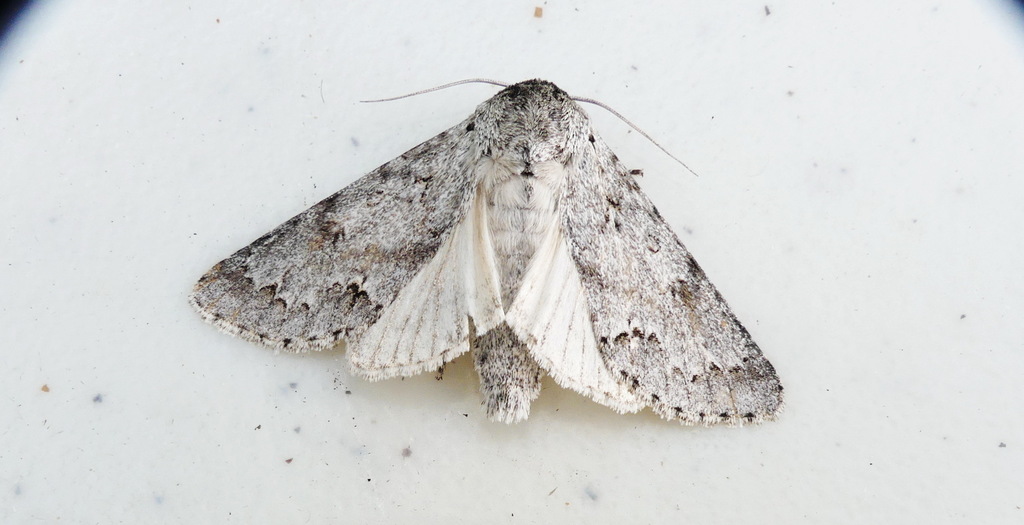
Large Gray Dagger
Acronicta insita
Insectstrong against fungi, fish
Common
Swarm
While active with another insect in play, each of its attacks also hits the opposing bench for 10, without knocking them out (20 with two others).
41

38
Large Gray Dagger
Acronicta insita
Insectstrong against fungi, fish
Common
While active with another insect in play, each of its attacks also hits the opposing bench for 10, without knocking them out (20 with two others).
Acronicta insita
Photo: © Susan Blayney (original photo) · CC BY 4.0 (licence text) · cropped
Strong against: it deals 20% more damage to them. Weak against: these types deal 20% more damage to it.
Acronicta insita, the large gray dagger or fingered dagger, is a moth of the family Noctuidae. The species was first described by Augustus Radcliffe Grote in 1874. It is found from Newfoundland west to the Pacific coast and Vancouver Island and Haida Gwaii, British Columbia, south to North Carolina and Colorado.
Acronicta hesperida and Acronicta dactylina were formerly considered to be separate species, but are now considered a synonym.
The wingspan is 45–55 mm. Adults are on wing from May to July in one generation depending on the location.
The larvae feed on alder, birch, poplar, hawthorn and willow.
They have fine hairs that are actually hollow, containing a toxin within. If direct contact is made through handling or even indirect contact through clothing, mild to severe rashes may appear for up to a week and may spread easily to other areas of the body through clothing rubbing on exposed area or scratching. Some people react more seriously while others have no reaction at all.
Excerpt from the Wikipedia article Acronicta insita, by its authors, under the CC BY-SA 4.0 licence.
No global status on the IUCN Red List: that’s what makes this card Common.
Every Common card has 100 points, shared between HP, ATK and DEF:
How they’re shared out:

 DEF 38