 …
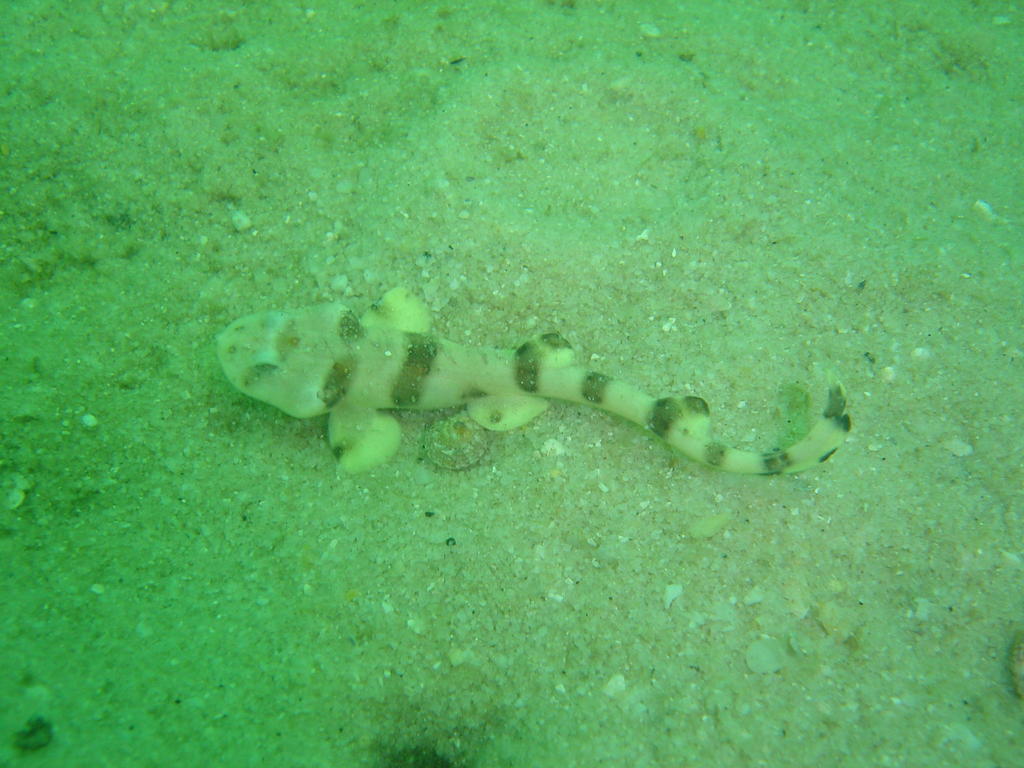
Tiger Catshark
Halaelurus natalensis
Fishstrong against mammals, arachnids
Rare
School
While active with another fish in play, a fish on your bench absorbs up to 9 of the damage this card takes, without being knocked out (18 with two others).
34

51
Tiger Catshark
Halaelurus natalensis
Fishstrong against mammals, arachnids
Rare
While active with another fish in play, a fish on your bench absorbs up to 9 of the damage this card takes, without being knocked out (18 with two others).
Halaelurus natalensis
Photo: © Peter Southwood (original photo) · CC BY-SA 4.0 (licence text) · cropped
Strong against: it deals 20% more damage to them. Weak against: these types deal 20% more damage to it.
The tiger catshark (Halaelurus natalensis) is a species of shark belonging to the family Pentanchidae, the deepwater catsharks. It is found over sandy areas and near reef peripheries off South Africa and perhaps Mozambique, from close to shore to usually no deeper than 100 m (330 ft). Reaching a length of 50 cm (20 in), this small, slim shark has a broad, flattened head with an upturned snout tip. It can additionally be identified by its dorsal colour pattern of ten dark brown saddles on a yellowish brown background.
Bottom-dwelling and inactive, the tiger catshark feeds on a wide variety of fishes and invertebrates from on or near the sea floor. An oviparous species, the female retains her eggs internally until the embryos are at an advanced state of development, resulting in a relatively short hatching time after laying. Between 12 and 22 encapsulated eggs are produced at a time, which the female attaches to the bottom. The tiger catshark is caught incidentally by commercial and recreational fishers but has no economic value. It has been listed as vulnerable by the International Union for Conservation of Nature (IUCN).
Excerpt from the Wikipedia article Tiger catshark, by its authors, under the CC BY-SA 4.0 licence.
Vulnerable on the IUCN Red List: that’s what makes this card Rare.
Every Rare card has 130 points, shared between HP, ATK and DEF:
How they’re shared out:

 DEF 51